
Goal
When I joined the team, the main challenge was to define the product’s real value and drive early growth through design.

Lack of information about co-living generates friction
Not knowing what type of people will share the space is a barrier to booking.
Affinity matters more than location or price
Lifestyle, values, and the house’s overall vibe are decisive factors when choosing.


Connection with others is not a bonus — it’s a necessity
Users seek spaces where they can build relationships, not just a place to sleep.
Benchmark
We analysed 9 platforms including Meetup, Couchsurfing, Wander, Airbnb, Hostelworld, and Booking identifying common patterns in navigation, search personalisation, and community building.
+ 20 Common Patterns
(Navigation, search, and social features)
2 Market Gaps
Lack of integration between community and accommodation.
Low personalisation based on affinity.
Community
Shared interests and experiences, but without a solid integrated accommodation structure.
Booking Platforms
Functional filters (price, location, amenities) but lacking depth in affinity or lifestyle matching.
Process
We designed the first MVP around the core actions of the platform: listing a house or renting one, allowing users to define and customize the vibes of each space. The idea was to give users full freedom to express what kind of experience they wanted to live and share.
Through real user testing, we quickly learned that too much freedom created friction: custom, unstructured vibes resulted in poor matches and diluted the sense of community.
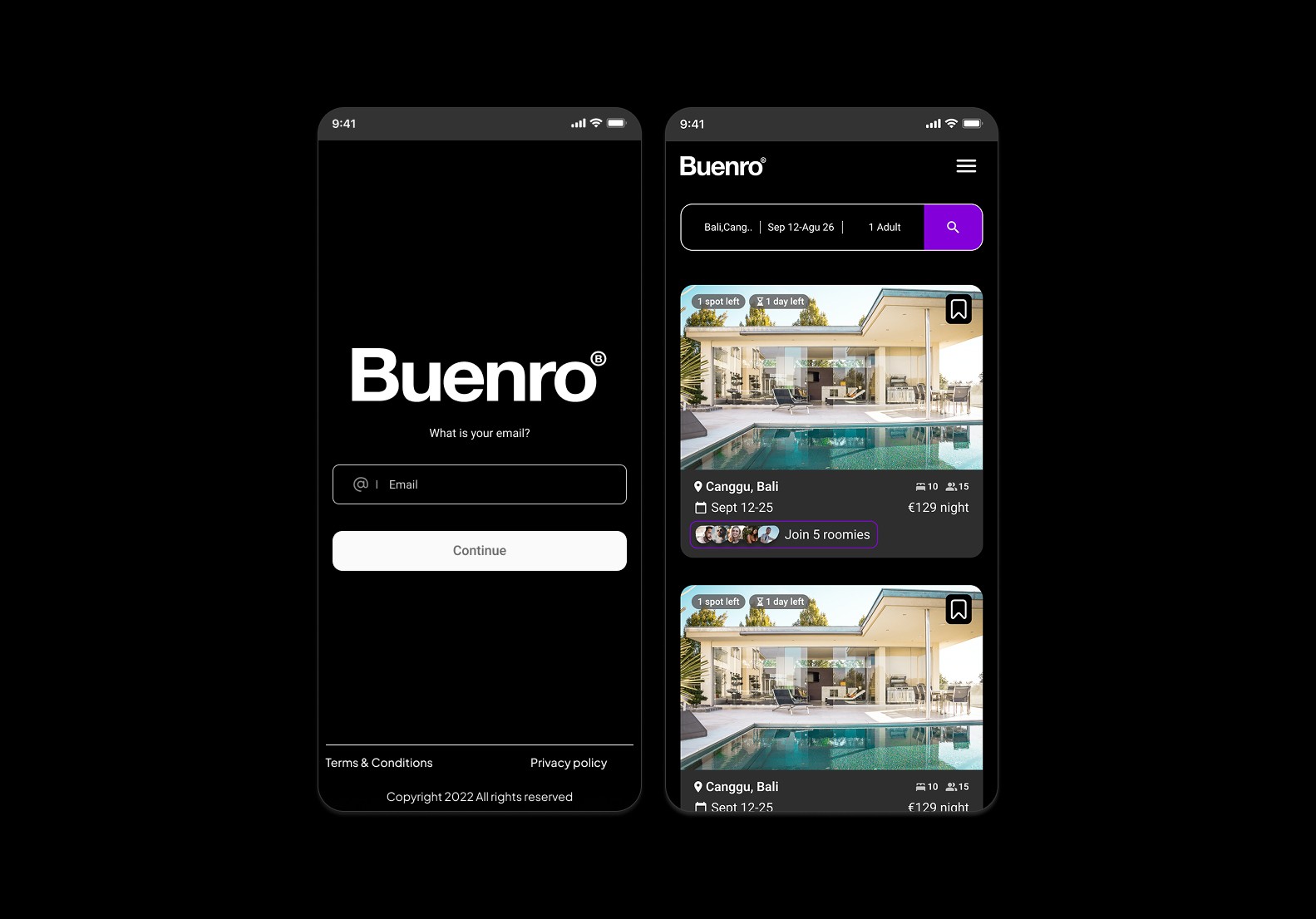
MVP 1
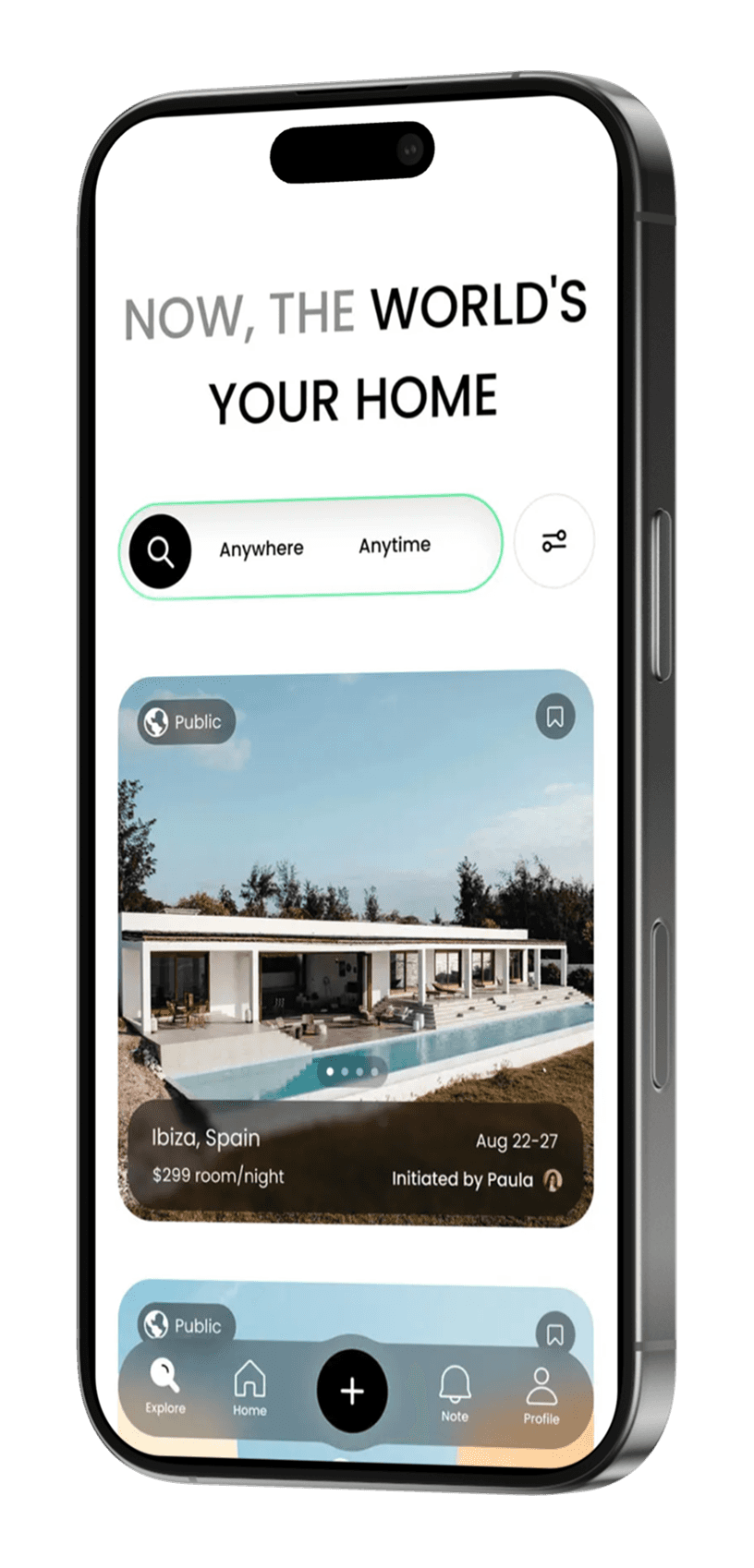
Based on those learnings, we redesigned the experience around 7 global vibes, supported by a scoring system. Each user received a percentage-based profile (e.g. 40% Surfer, 30% Explorer), allowing them to match more easily with compatible roommates and houses.
We also integrated vibe selection directly into the onboarding flow, making the house-search experience faster and more relevant by showing only spaces aligned with the user’s vibe profile.
This iteration validated that we were moving in the right direction — but more importantly, it revealed something deeper:
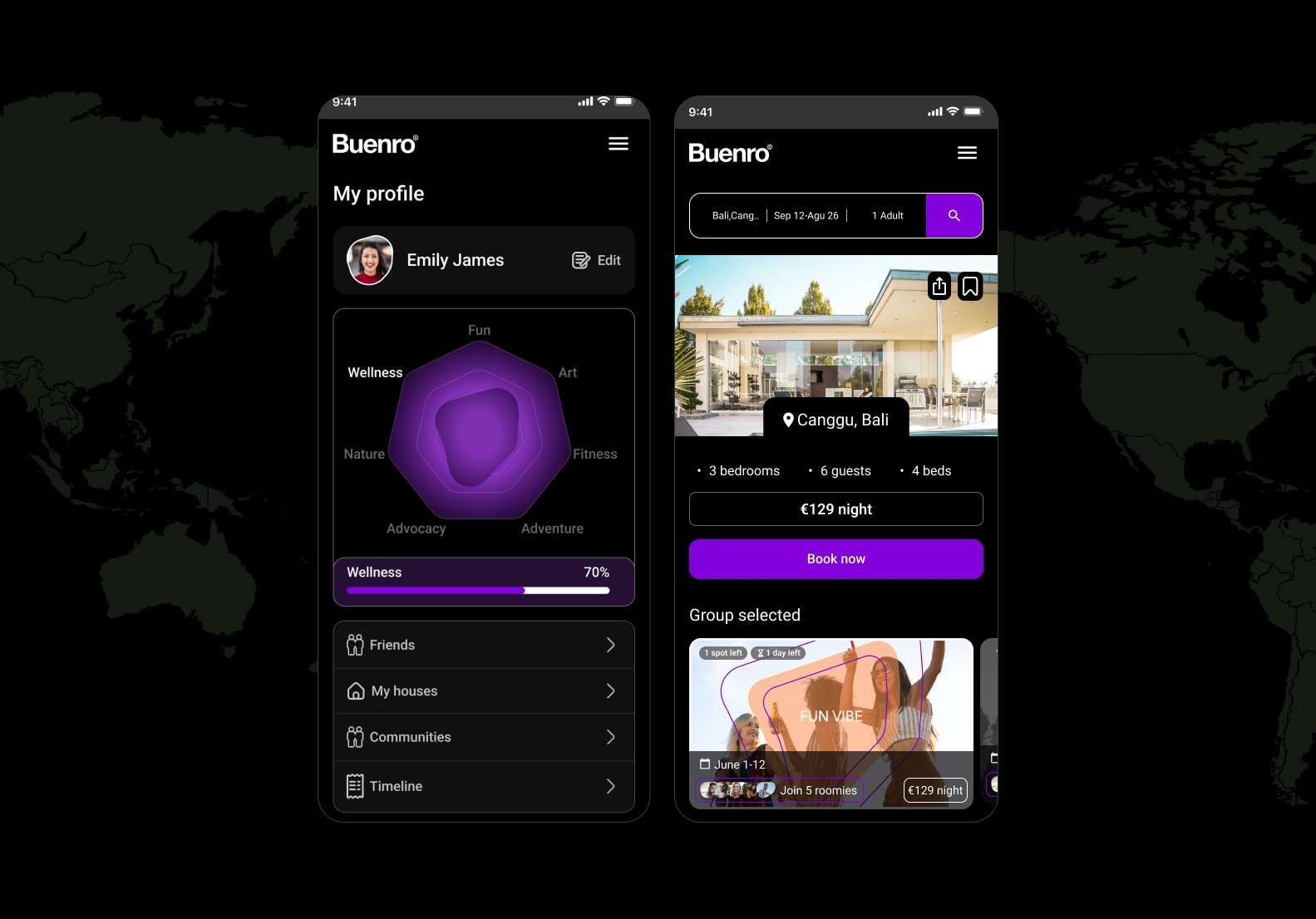
Rebrand
With that insight, we repositioned vibes as the core conceptual and functional axis of the product.
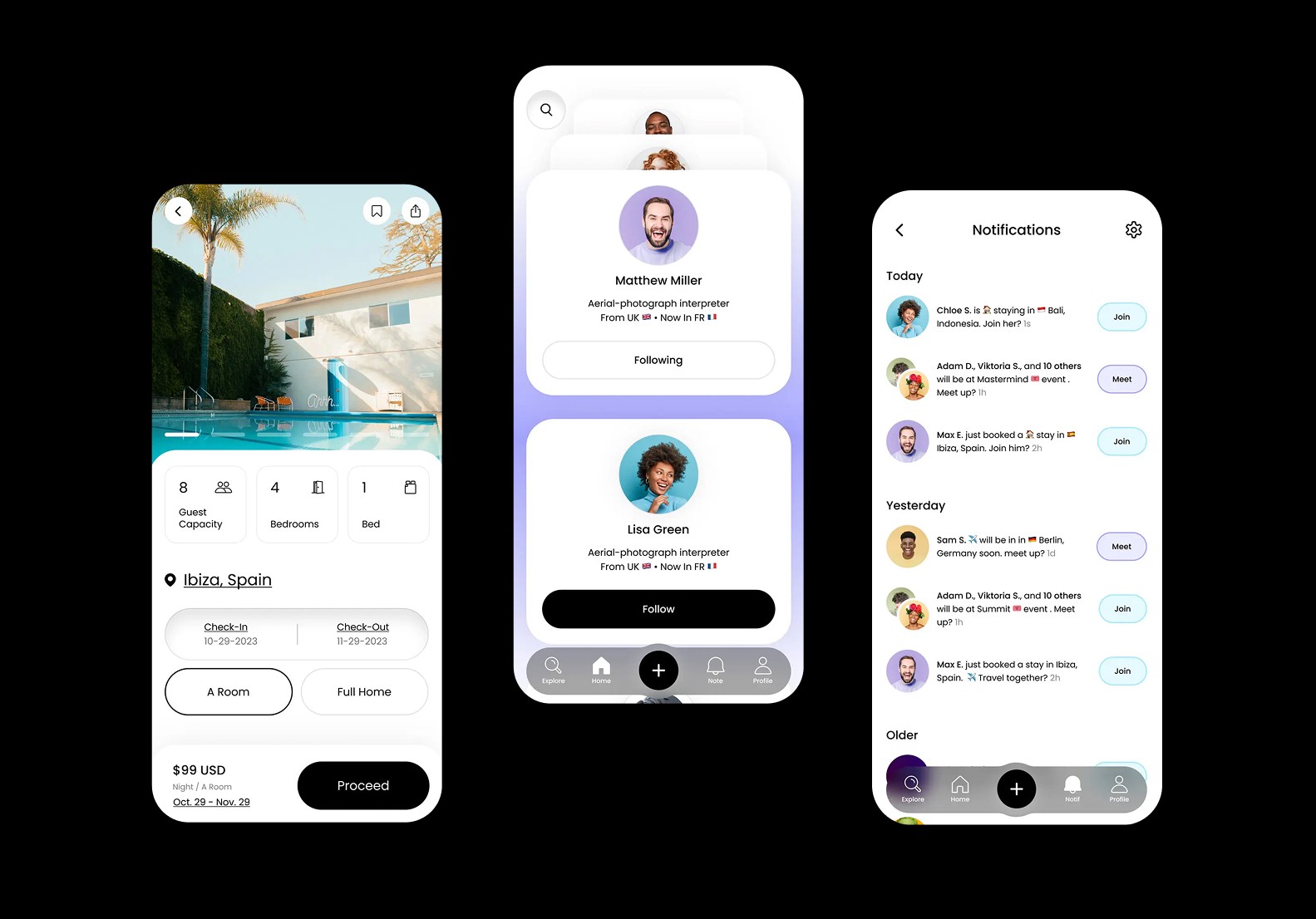
We introduced community-driven features, such as a shared timeline where users could post upcoming trips or plans — enabling roommates with similar vibes to join and extend their experiences together.
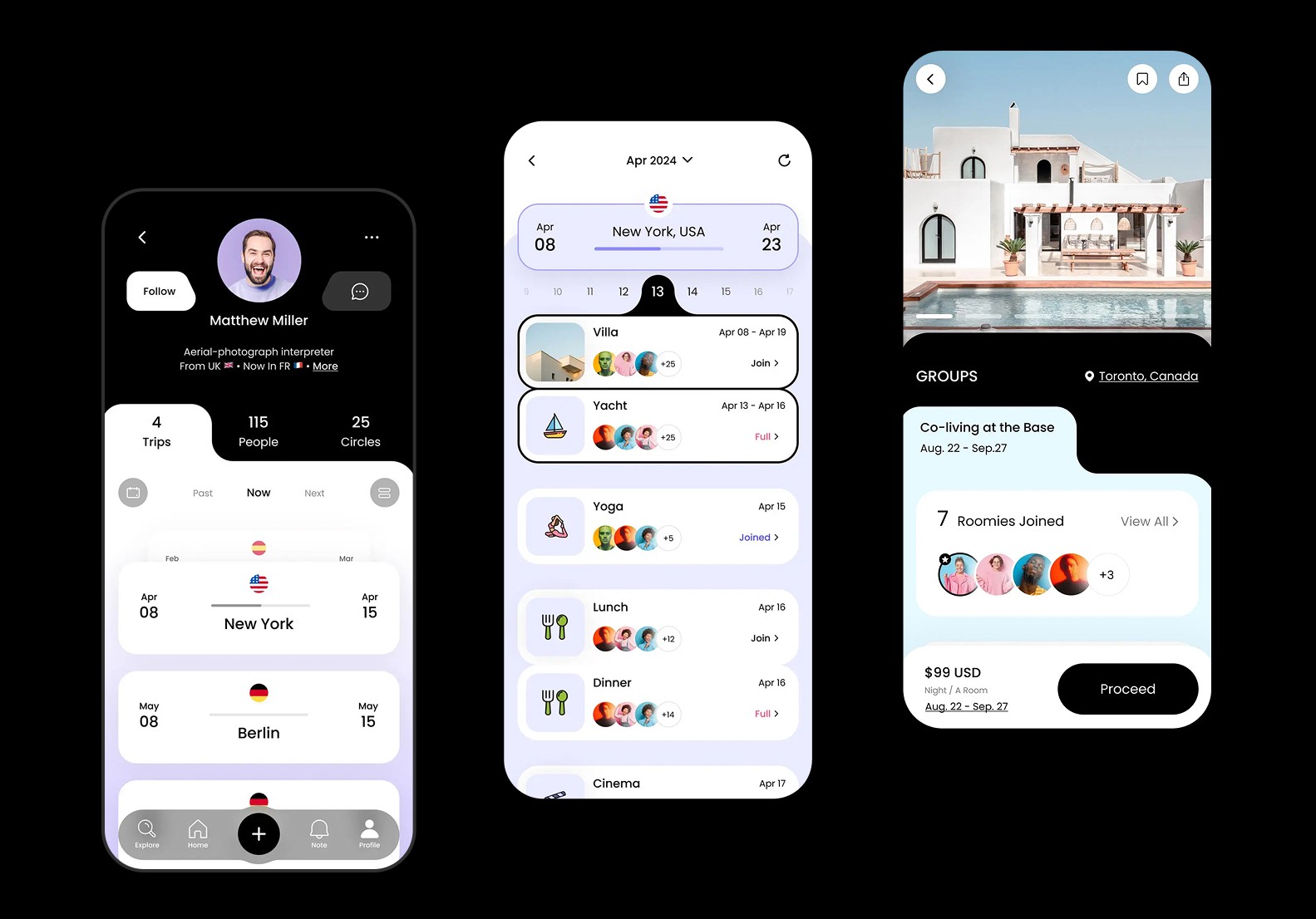
Once this direction was validated, we initiated a full redesign of the brand and the app, resulting in a cleaner, more efficient, and visually stronger product.
I finished the project by leading this redesign and laying the foundations of a new design system, ensuring visual consistency and scalability for future growth.
our
Impact
Based on the work described above, these were the key improvements we achieved:
match 0+
match 0+
Structured vibes and scoring reduced mismatches between roommates and increased compatibility from the first interaction.
0%
0%
Setting vibes during onboarding shortened the path to finding relevant houses and reduced cognitive load.
0+
0+
Community-driven features shifted the product from transactional co-living to shared experiences, increasing emotional engagement.
0%
0%
The new design system enabled faster iteration, visual coherence, and a solid foundation for future features and growth.
Discovery